Getting active acne under control can feel like a major milestone. The painful spots have settled, new breakouts are less frequent, and the skin finally feels calmer.
But then another concern becomes more noticeable. Perhaps there are small depressions where deeper pimples used to be. The pores seem more obvious. There may be lingering brown or red marks, or the skin simply doesn’t look as smooth as it did before acne.
This is a common point of confusion: if the acne is gone, why doesn’t the skin look clear yet?
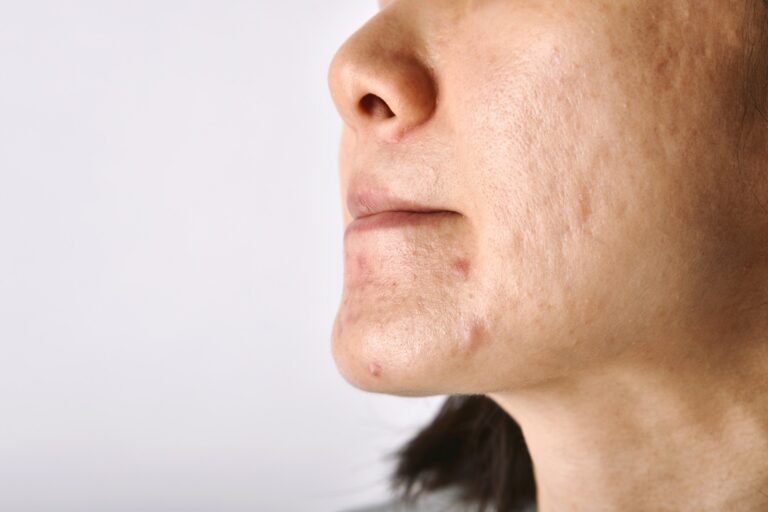
The answer is that active acne and the changes it leaves behind are two different issues. Uneven-looking skin after acne can be caused by pigmentation, redness, enlarged pores, changes in texture, or true acne scars, and these do not necessarily respond to the same treatment.
Fractional laser resurfacing may be considered for certain concerns, particularly some types of acne scarring and uneven texture. But before deciding whether laser treatment is appropriate, it helps to work out what is actually making the skin look uneven.
Key Pointers
- Active acne and acne scars are different conditions and may require different approaches.
- Skin may continue to look uneven because of post-acne pigmentation, redness, enlarged pores, textural changes, or acne scars.
- Not every mark left by acne is a scar.
- Fractional laser resurfacing may be considered for certain types of acne scars and uneven skin texture.
- Different acne scar types may respond differently to treatment.
- Active acne should generally be addressed as part of the overall treatment plan to reduce the likelihood of new scars developing.
- A dermatologist can assess what is causing the uneven appearance and discuss suitable treatment options.
Why Does My Skin Still Look Uneven After My Acne Has Cleared?
Once active breakouts stop demanding attention, the changes they have left behind often become much easier to see.
And “uneven skin” can mean several different things.
For one person, the concern may be brown marks. For another, it may be small indentations across the cheeks. Someone else may be bothered by visible pores or a generally rough texture.
After acne, the skin may show:
- Post-inflammatory hyperpigmentation (dark marks)
- Persistent redness after inflammation
- Enlarged or more noticeable pores
- Uneven skin texture
- Depressed acne scars
- Raised scars or keloids
This distinction matters because a treatment intended for pigmentation, for example, may not address a depressed acne scar.
So before asking “Which treatment should be used?”, a more useful question is often: “What exactly has acne left behind?”
Are My Acne Marks Actually Acne Scars?
This is where terminology can become confusing.
Patients often use “acne marks” and “acne scars” interchangeably, but medically, they are not necessarily the same thing.
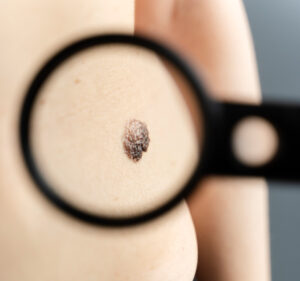
A flat brown mark left after a pimple may be post-inflammatory hyperpigmentation (PIH). Red or pink marks may reflect changes following inflammation. These can sometimes fade gradually, although the time required varies.
A true acne scar involves a structural change in the skin.
Depressed acne scars may include:
- Ice pick scars: narrow, deeper indentations
- Boxcar scars: broader depressions with more defined edges
- Rolling scars: wider depressions that can give the skin a wavy or uneven appearance
Acne can also result in raised scars, including hypertrophic scars or keloids, in some individuals. Knowing which type is present helps guide the discussion about treatment.
Why Do Acne Scars Make the Skin Look Uneven?
A pimple may last days or weeks, but deeper inflammation can sometimes affect the structure of the skin long after the breakout itself disappears.
When acne inflammation extends deeper into the skin, the normal healing process can be disrupted. Changes in collagen during healing may leave an indentation or, less commonly, a raised scar.
This is why someone can have no active acne but still notice shadows, dips, or irregularities when light falls across the face.
The more important issue at this stage is not simply whether there are “scars”, but what type of scars they are, how deep they are, and whether other post-acne changes are present at the same time.
What Is Fractional Laser Resurfacing?
The word “resurfacing” can make it sound as though a laser simply removes the damaged surface and reveals completely smooth skin underneath. The actual process is more nuanced.
Fractional laser resurfacing treats the skin in microscopic treatment zones while leaving surrounding areas untreated.
The controlled treatment stimulates the skin’s healing response and collagen remodelling. For this reason, fractional laser treatment may be considered when addressing certain textural changes and acne scars.
However, fractional lasers are not all identical, and the type of laser, treatment settings, skin type, scar characteristics, and treatment goals all need to be considered.
Can Fractional Laser Help With Acne Scars?
Fractional laser resurfacing may be an option for certain depressed acne scars and areas of uneven texture.
However, acne scars rarely fit neatly into one category. A person may have rolling scars across one part of the cheek, deeper ice pick scars elsewhere, enlarged pores, and pigmentation at the same time.
That matters because one treatment may not address every feature equally.
For example, deeper or more sharply defined scars may require a different approach from shallower textural irregularities. In some cases, a dermatologist may discuss a combination of treatment methods rather than fractional laser treatment alone.
The goal of an assessment is therefore not simply to decide whether someone is “suitable for laser”. It is to determine which features are contributing to the uneven appearance and what treatment approach may be appropriate for them.
Can Fractional Laser Help With Enlarged Pores and Uneven Skin Texture?
Visible pores and rough texture are common concerns after acne, but they can have several contributing factors.
Fractional laser resurfacing may be considered for some forms of textural irregularity because of its effect on skin remodelling. However, pores cannot simply be “removed”, and their appearance can also be influenced by oil production, genetics, previous acne, and skin structure.
This is another area where realistic expectations matter.
Rather than promising perfectly smooth or “poreless” skin, treatment discussions should focus on what aspects of the skin’s appearance may reasonably be improved and what may remain part of its natural texture.
What If the Uneven Appearance Is Actually Pigmentation?
Sometimes the skin looks uneven even though its surface feels relatively smooth.
In these cases, the issue may be colour rather than texture.
Brown marks after acne may represent post-inflammatory hyperpigmentation, while red or pink areas may remain after inflammation has settled.
These concerns may require a different management strategy from true acne scars.
This is why starting with the assumption that every post-acne mark needs resurfacing can be misleading. A dermatologist will usually assess colour and texture separately, even when both are contributing to the overall appearance.
Should Active Acne Be Controlled Before Treating Acne Scars?
There is little benefit in concentrating only on old scars if significant new acne is continuing to develop.
Active inflammatory acne can create additional pigmentation and potentially new scars. For this reason, controlling ongoing acne is an important part of a broader acne scar management plan.
This doesn’t mean every patient has to wait until there has not been a single pimple for months before discussing scars. Rather, the dermatologist needs to consider both problems together and decide on the appropriate sequence of treatment.
The priority is to avoid repeatedly treating yesterday’s scars while today’s acne continues creating new ones.
Is Fractional Laser Resurfacing Suitable for Every Skin Type?
This deserves careful consideration, particularly in Asian skin.
Laser treatment needs to be selected and performed with the individual’s skin type in mind because skin can respond to inflammation by producing additional pigmentation.
Factors that may be considered include:
- Skin tone and tendency to develop pigmentation
- Type and depth of acne scars
- Presence of active acne
- Existing post-inflammatory hyperpigmentation
- Previous treatments
- Medical history
- Expected downtime and treatment goals
This is why fractional laser resurfacing should not be approached as a standard treatment with identical settings for every patient.
When Should You See a Dermatologist About Acne Scars?
If the acne has settled but you’re still unhappy with how your skin looks, it may be useful to have the remaining changes properly identified before choosing a treatment.
Consider a dermatological assessment if:
- You have indentations or persistent uneven texture after acne
- You’re unsure whether you have pigmentation or true acne scars
- Acne scars are becoming more noticeable
- You are considering fractional laser resurfacing
- Previous acne scar treatments have not addressed your main concern
- You still have active acne alongside scarring
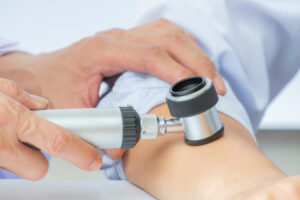
A dermatologist can examine the skin, identify the types of acne scars and post-acne changes present, and discuss which management options may be appropriate.
At About Dermatology in Singapore, patients can consult Dr Melissa Tan Wee Ping for the assessment and management of acne, acne scars, pigmentation, and other skin concerns.
Frequently Asked Questions
1. Can fractional laser completely remove acne scars?
Acne scar treatment generally aims to improve the appearance and texture of scars rather than guarantee complete removal. The degree of improvement varies according to factors such as scar type, depth, skin type, and response to treatment.
2. How do I know if I have acne scars or just acne marks?
Flat areas of discolouration may be post-inflammatory pigmentation or redness, while true acne scars involve changes in the skin’s texture or structure. A dermatologist can assess which changes are present.
3. Does fractional laser work for ice pick, boxcar and rolling scars?
Different scar types can respond differently to treatment. Fractional laser resurfacing may be considered for some scars, while other scar types may require different or combined approaches.
4. Can fractional laser be done if I still have acne?
The presence and severity of active acne need to be assessed before acne scar treatment. Managing ongoing acne is important because new inflammatory lesions can lead to further marks or scars.
5. How many fractional laser sessions are needed for acne scars?
There is no single number that applies to everyone. The treatment plan depends on the type and severity of scarring, the laser being considered, skin characteristics, response to treatment, and individual treatment goals.
Clear of Acne but Not the Marks It Left Behind? Talk to a Dermatologist
Getting acne under control is an important achievement, but it doesn’t always erase the evidence of previous breakouts.
What looks like “uneven skin” may actually be a combination of pigmentation, enlarged pores, textural irregularities and different types of acne scars. And because these concerns aren’t identical, they shouldn’t automatically be treated as though they are.
Fractional laser resurfacing may be one option for certain acne scars and textural concerns, but the right starting point is an assessment of what is actually affecting the skin.
If your acne has settled but you’re still concerned about scars, marks or uneven texture, book a consultation with Dr Melissa Tan Wee Ping at About Dermatology to have your skin assessed and discuss which treatment options may be appropriate for your concerns.