Birthmarks are incredibly common. Some people are born with them, while others notice them shortly after birth. Over time, they often become such a familiar part of the skin that they’re easy to forget about, until something changes.
Perhaps you’ve noticed that your birthmark looks darker than before. Maybe it seems larger, or someone has commented that you should have it checked. It’s natural to wonder whether it’s simply part of your skin or whether it deserves a closer look.
The reassuring news is that most birthmarks are harmless and remain stable throughout life. However, there are certain situations where a medical assessment may be appropriate, especially if a birthmark changes or begins causing symptoms.
Knowing what to look out for can help you decide when it’s worth speaking with a dermatologist.
Key Pointers
- Most birthmarks are benign (non-cancerous) and do not require treatment.
- Birthmarks can be pigmented or vascular (blood vessel-related).
- Some birthmarks may change gradually over time, while others remain unchanged.
- Changes such as rapid growth, bleeding, colour changes, or pain should be assessed by a doctor.
- Birthmark removal may be considered for cosmetic, functional, or medical reasons, depending on the type of birthmark.
- A dermatologist can assess a birthmark and advise whether monitoring or treatment is appropriate.
What Is a Birthmark?
If you’ve had a birthmark for as long as you can remember, it’s easy to think of it as simply another part of your skin. But birthmarks are actually a broad group of skin changes that can look quite different from one person to another.
A birthmark is an area of skin that differs in colour or appearance from the surrounding skin. Many are present at birth, while others become noticeable during the first few weeks or months of life.
Birthmarks generally develop because of:
- An increase in pigment-producing cells
- Changes involving blood vessels beneath the skin
They can vary in size, colour, shape, and location. Some are small and barely noticeable, while others may cover larger areas of the body.
What Types of Birthmarks Are There?
Not all birthmarks are the same, and understanding the different types can help explain why they behave differently.
Broadly speaking, birthmarks are divided into two main categories.
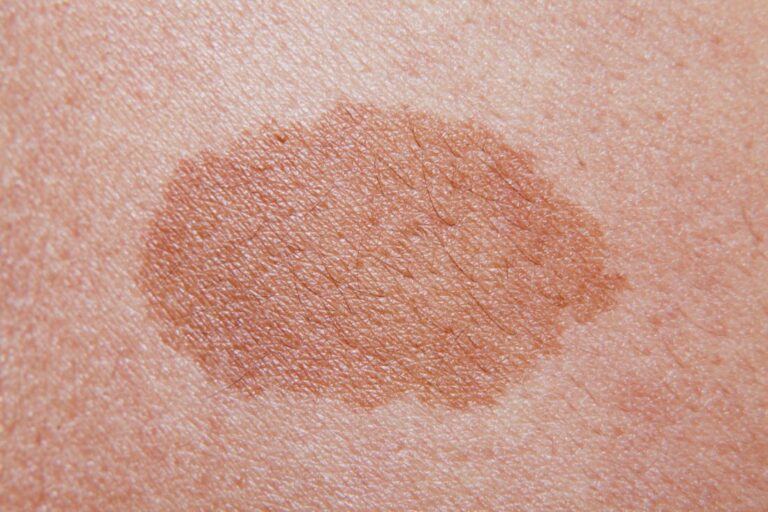
Pigmented Birthmarks
These develop because of increased pigment in the skin.
Examples include:
- Congenital melanocytic naevi (moles present at birth)
- Café-au-lait spots
These birthmarks are usually brown or dark in colour.
Vascular Birthmarks
These develop because of changes involving blood vessels.
Examples include:
- Haemangiomas
- Port-wine stains
These often appear pink, red, or purple.
Each type has its own characteristics, which is why diagnosis is important before considering treatment or monitoring.
Are Most Birthmarks Harmless?
This is one of the most common concerns people have, and fortunately, the answer is yes.
The majority of birthmarks are harmless and remain stable throughout life. They often do not cause pain, interfere with health, or require medical treatment.
For many people, birthmarks are simply part of their natural skin.
That said, “harmless” doesn’t necessarily mean they should never be assessed. In some situations, a dermatologist may recommend monitoring certain birthmarks over time, particularly if they are large or have features that warrant observation.
The goal isn’t to create concern, but rather to ensure any significant changes are identified appropriately.
When Should a Birthmark Be Checked?
Although most birthmarks are benign, it’s a good idea to pay attention to any noticeable changes.
You should consider seeing a dermatologist if a birthmark:
- Changes in colour
- Increases rapidly in size
- Develops an irregular shape or border
- Begins to bleed or ulcerate
- Becomes painful or itchy
- Is repeatedly irritated by clothing or shaving
It’s also worth having a birthmark assessed if you’re simply unsure what it is.
In many cases, the changes turn out to be harmless, but having them evaluated can provide reassurance and help determine whether any follow-up is needed.
Can Birthmarks Change Over Time?
It’s not unusual for people to notice gradual changes in a birthmark over the years, especially as they age.
Some birthmarks naturally become:
- Slightly darker or lighter
- More raised
- Less noticeable
- Larger as the body grows
These changes are often expected, particularly during childhood.
However, sudden or significant changes are different from gradual changes associated with growth or ageing, which is why they deserve medical assessment.
Can Birthmarks Be Removed?
Some people choose to keep their birthmarks, while others explore removal for cosmetic or practical reasons.
Depending on the type of birthmark, treatment may sometimes be considered if:
- The birthmark affects appearance
- It interferes with daily activities
- It causes repeated irritation
- Medical assessment indicates treatment is appropriate
Potential treatment options may include:
- Laser treatments
- Surgical removal
- Observation with regular monitoring
The most appropriate approach depends on the type, size, location, and characteristics of the birthmark.
Do Birthmarks Ever Become Cancerous?
This is understandably one of the questions people worry about most.
Fortunately, most birthmarks remain benign throughout life and do not become cancerous.
However, certain pigmented birthmarks, particularly large congenital melanocytic naevi, may have a higher risk of developing complications compared with smaller birthmarks.
This doesn’t mean that cancer will develop. It simply means that regular monitoring may sometimes be recommended.
A dermatologist can advise whether ongoing observation is appropriate based on the individual birthmark.
When Should You See a Dermatologist About a Birthmark?
It can be difficult to know whether a birthmark is behaving normally or whether it’s worth having it checked.
If you’re concerned about changes, or if you’ve never had the birthmark assessed before, a consultation can provide clarity.
You may consider seeing a dermatologist if:
- Your birthmark has changed in appearance
- It causes discomfort or irritation
- You’re considering removal
- You’re unsure what type of birthmark you have
At About Dermatology in Singapore, patients can consult Dr Melissa Tan Wee Ping, who assesses and manages skin conditions, including pigmented and vascular birthmarks.
Frequently Asked Questions
1. Are birthmarks usually harmless?
Yes. Most birthmarks are benign and remain stable throughout life without causing health problems.
2. Why has my birthmark changed colour?
Some birthmarks may change gradually over time, but sudden or significant colour changes should be assessed by a dermatologist.
3. Should I be worried if my birthmark gets bigger?
Some birthmarks naturally enlarge as the body grows, particularly during childhood. Rapid or unexpected growth should be evaluated.
4. Can birthmarks be removed?
Depending on the type of birthmark, treatment options such as laser therapy or surgical removal may be discussed for cosmetic, functional, or medical reasons.
5. When should I see a dermatologist about my birthmark?
You should consider seeking medical advice if a birthmark changes in colour, size, shape, begins bleeding, becomes painful, or if you’re unsure what it is.
Concerned About a Birthmark? Book For A Skin Assessment With About Dermatology
Most birthmarks are harmless and don’t require treatment. But if you’ve noticed a change, or you’ve simply been wondering whether a birthmark should be checked, it’s always reasonable to seek professional advice.
A consultation can help determine:
- What type of birthmark you have
- Whether it’s behaving as expected
- Whether monitoring or treatment may be appropriate
At About Dermatology, consultations focus on carefully assessing each birthmark and discussing management options that are appropriate for your individual skin concerns. If you have questions about a birthmark or are considering treatment, consider booking a consultation for a personalised assessment.