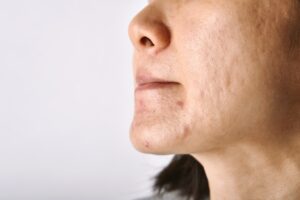
You’ve finally managed to get your acne under control, only to be left with another frustrating reminder of the breakout: dark spots that seem to linger long after the pimples have disappeared. Many people assume that every mark left behind by acne is a scar, but that’s not always the case.
In reality, dark spots after acne are often different from acne scars. Knowing what they are and how they behave can help you set realistic expectations and know when it may be worth seeking professional advice.
Key Pointers
- Dark spots left behind after acne are often post-inflammatory hyperpigmentation (PIH), not true acne scars.
- Acne pigmentation may fade over time, but the process can take months.
- Factors such as skin type, sun exposure, and the severity of inflammation can affect how long dark spots remain visible.
- Acne scars and acne pigmentation are different concerns and may require different approaches.
- Certain treatments may help improve pigmentation more quickly.
- A dermatologist can assess persistent acne marks and recommend appropriate management options.
What Are the Dark Spots Left Behind After Acne?
Many people assume that any mark left after a breakout is a scar. That’s understandable; after all, the acne is gone, but something is still visible on the skin.
However, dark spots that remain after acne are often not scars at all.
These marks are commonly known as post-inflammatory hyperpigmentation (PIH). They occur when inflammation from acne triggers the skin to produce excess melanin, the pigment responsible for skin colour.
As the acne lesion heals, the excess pigment can remain behind, creating flat brown, grey, or dark patches on the skin.
Unlike scars, these marks do not change the skin’s texture. The skin surface remains smooth, but the colour difference can make the marks more noticeable.
What’s the Difference Between Acne Marks and Acne Scars?
This is one of the most frequently asked questions in dermatology consultations.
The terms “acne marks” and “acne scars” are often used interchangeably, but they refer to different conditions.
Acne Marks (Post-Inflammatory Hyperpigmentation)
These are colour changes that occur after inflammation.
They are usually:
- Flat
- Brown, grey, or dark in colour
- Smooth to the touch
- More noticeable after the acne heals
Acne Scars
Acne scars involve changes to the skin’s structure.
They may appear as:
- Indentations or depressions in the skin
- Raised scars
- Uneven skin texture
A simple way to think about it is this: if the skin feels smooth but looks darker, it may be pigmentation. If the skin feels uneven, it may be a scar.
Will Dark Spots From Acne Fade on Their Own?
This is often the question people want answered most. The good news is that post-inflammatory hyperpigmentation can gradually fade over time. However, “gradually” is the key word.
Depending on the individual and the depth of pigmentation, dark spots may take:
- Several weeks
- Several months
- Sometimes longer
Many people become concerned because they expect the marks to disappear as quickly as the acne itself. Unfortunately, pigmentation often lingers much longer than the original breakout. Patience is often part of the process, although some factors can influence how quickly improvement occurs.
Why Do Some Acne Marks Take Longer to Fade?
If you’ve noticed that some dark spots seem to hang around forever while others fade relatively quickly, you’re not imagining it. Several factors can affect how long pigmentation remains visible.
These include:
Skin Tone
People with medium to darker skin tones may be more prone to post-inflammatory hyperpigmentation and may notice the pigmentation lasts longer.
Severity of Inflammation
The more inflamed the acne lesion was, the more pigment may be produced during healing.
Sun Exposure
Sunlight can darken existing pigmentation and make it more persistent.
Picking or Squeezing Pimples
Manipulating acne lesions may increase inflammation, which can contribute to more noticeable pigmentation afterwards.
These factors help explain why acne marks can vary significantly from person to person.
Can Skincare Products Help Fade Acne Pigmentation?
After dealing with acne, many people immediately start looking for products that promise to remove dark spots. Some skincare ingredients may help improve the appearance of post-inflammatory hyperpigmentation over time.
Examples include ingredients that support skin renewal or help regulate pigment production.
However, results are often gradual and depend on factors such as:
- The depth of pigmentation
- Consistency of use
- Individual skin response
Sun protection is also an important part of managing pigmentation, as UV exposure may worsen existing dark spots.
What Treatments May Help Improve Acne Pigmentation?
For people who want to address persistent acne marks, a dermatologist may discuss various treatment options depending on the individual’s skin condition.
Potential options may include:
- Topical prescription treatments
- Chemical peels
- Laser treatments
- Other pigment-targeting procedures
The most appropriate approach depends on factors such as the severity of pigmentation, skin type, and whether active acne is still present. Because pigmentation and acne scars are different conditions, treatment plans are usually tailored accordingly.
When Should You See a Dermatologist About Acne Marks?
It’s normal for some acne marks to take time to fade. However, there are situations where a professional assessment may be helpful.
You may consider seeing a dermatologist if:
- Dark spots remain visible for many months
- You are unsure whether the marks are pigmentation or scars
- Over-the-counter products have not helped
- The pigmentation affects your confidence or quality of life
- You would like to discuss treatment options
A consultation can help clarify what type of post-acne changes are present and what management options may be appropriate.
At About Dermatology in Singapore, patients can consult Dr Melissa Tan Wee Ping, who manages a wide range of skin concerns including acne, acne scars, and post-inflammatory pigmentation.
Frequently Asked Questions (FAQs)
1. Are dark spots from acne permanent?
Many dark spots caused by post-inflammatory hyperpigmentation may fade over time, although the process can take several months or longer.
2. How do I know if I have acne scars or acne pigmentation?
Pigmentation causes colour changes while the skin remains smooth. Acne scars usually involve changes in skin texture, such as indentations or raised areas.
3. Why do my acne marks seem to take so long to disappear?
Factors such as skin tone, sun exposure, inflammation severity, and individual healing responses can affect fading time.
4. Can acne pigmentation return after it fades?
Once pigmentation improves, it typically does not return unless new inflammation or acne develops.
5. Can a dermatologist help with acne pigmentation?
A dermatologist can assess the pigmentation and discuss management options that may help improve its appearance.
Still Seeing Dark Spots Months After Your Acne Has Cleared?
Getting rid of acne can feel like a major victory, but it can be frustrating when dark marks remain behind. Not all post-acne marks are scars, and when you know the difference, it helps you choose the most appropriate management approach.
At About Dermatology, consultations focus on identifying the cause of persistent acne marks and discussing personalised treatment options based on your skin concerns. If you’re unsure whether you’re dealing with acne pigmentation or acne scars, consider booking a consultation for a professional assessment.