
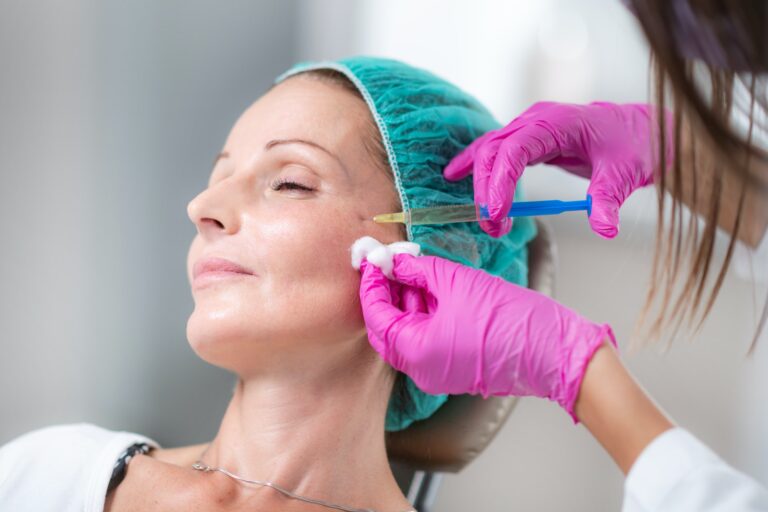
Are you too young for dermal fillers? Or should you have started earlier? The truth is, there isn’t a single “right age” that applies to everyone. Changes in the skin happen gradually and differently for each person. Some may notice volume loss earlier, while others may not feel concerned until much later.
Ageing affects the face, and knowing about this and how dermal fillers are sometimes used can help you decide whether it’s something worth discussing with a dermatologist.
Key Pointers
- There is no fixed age to start dermal fillers
- Fillers are commonly used to address volume loss, contour changes, or facial balance
- Some individuals explore fillers earlier for subtle facial enhancement, while others consider them later for age-related changes
- Decisions are based on individual concerns, not age alone
- A dermatologist consultation helps assess suitability and expectations
What Do Dermal Fillers Do?
You might hear about dermal fillers often, but what they actually do under the skin is not always clearly explained.
Dermal fillers are injectable substances –commonly hyaluronic acid-based– that are used to restore volume, support facial structures, or refine certain features. Hyaluronic acid is a substance naturally found in the body that helps retain moisture and maintain skin structure.
Depending on the individual, fillers may be used in areas such as:
- The cheeks, to support volume
- The under-eye area, where hollowness may appear
- The nasolabial folds (lines from nose to mouth)
- The lips, for shape or definition
A dermatologist evaluates facial proportions, skin quality, and patient concerns before discussing whether this approach may be appropriate.
At What Age Do People Usually Start Considering Dermal Fillers?
This is one of the most common questions people ask, and the answer can vary widely. Some individuals begin exploring dermal fillers in their 20s or early 30s, often for subtle adjustments such as enhancing facial balance or addressing early signs of volume changes.
Others may only consider fillers later, typically when they notice:
- Loss of facial volume
- Deeper lines or folds
- Changes in facial contours
Rather than focusing on a specific age, it is often more helpful to consider what changes you are noticing and how they affect you.
Am I Too Young for Dermal Fillers?
It’s natural to wonder whether starting too early might be unnecessary. In younger individuals, dermal fillers are usually considered only when there is a clear concern such as asymmetry, volume differences, or specific facial features the person wishes to address.
A dermatologist may also advise not proceeding if:
- The concern can be managed with non-invasive skincare approaches
- The individual’s expectations are not aligned with what fillers can achieve
- Treatment is not medically or aesthetically appropriate at that stage
This highlights an important point: dermal fillers are not always the first or necessary option, especially at a younger age.
What Changes in the Face With Age?
To understand timing, it helps to know what happens beneath the skin over time. Ageing is not just about wrinkles, it also involves gradual changes in:
- Collagen levels, which provide structure to the skin
- Fat distribution, which affects facial volume
- Bone structure, which subtly changes over time
These changes may lead to:
- Hollowing in certain areas (e.g. cheeks or under eyes)
- More prominent folds or lines
- A shift in facial contours
Dermal fillers may be discussed in some cases to address these structural changes, depending on the individual.
Is It Better to Start Early or Later?
There is no universal answer to this, and it often depends on personal goals and clinical assessment.
Some people explore dermal fillers earlier as part of a preventive or maintenance approach, while others prefer to wait until changes are more noticeable.
What matters more is:
- Whether there is a clear and appropriate indication
- Whether expectations are realistic and informed
- Whether the treatment aligns with the individual’s needs
A consultation helps ensure that decisions are based on careful evaluation rather than trends or assumptions.
When Might a Dermatologist Suggest Dermal Fillers?
Not everyone who asks about dermal fillers will be advised to proceed.
A dermatologist may consider discussing fillers when:
- There is visible volume loss affecting facial balance
- Certain features may benefit from structural support
- The individual understands the nature and limitations of treatment
Equally, a dermatologist may recommend alternative approaches or no treatment at all, depending on the situation.
Why Personalised Assessment Matters
It can be tempting to base decisions on age, social media trends, or what others are doing. However, facial structure, skin condition, and ageing patterns vary significantly from person to person.
A personalised consultation allows for:
- Assessment of facial anatomy and skin health
- Discussion of treatment goals and expectations
- Consideration of appropriate options, if any
This ensures that any decision made is informed and suitable for the individual.
At About Dermatology in Singapore, patients can consult Dr Melissa Tan Wee Ping, a senior consultant dermatologist who manages both medical and cosmetic skin concerns.
Frequently Asked Questions
1. What is the best age to start dermal fillers?
There is no single “best age.” The decision is based on individual concerns, facial changes, and professional assessment rather than a fixed age.
2. Can I get dermal fillers in my 20s?
Some individuals in their 20s explore fillers for specific concerns such as facial balance or volume differences. A dermatologist can assess whether this is appropriate.
3. Are dermal fillers only for older individuals?
No. While fillers are often used to address age-related volume loss, they may also be considered for structural or aesthetic concerns in younger individuals.
4. Should I wait until wrinkles appear before considering fillers?
Not necessarily. Some people explore treatment earlier, while others wait. The decision depends on individual goals and clinical assessment.
5. How do I know if dermal fillers are suitable for me?
A consultation with a dermatologist can help determine whether dermal fillers or other approaches, may be appropriate based on your concerns and skin condition.
Thinking About Dermal Fillers? Start the Conversation with About Dermatology
If you have been wondering whether it is the right time to consider dermal fillers, the most helpful step is to speak with a qualified professional.
A consultation can help you better understand:
- What changes you are noticing
- Whether these are part of normal ageing
- What options, if any, may be suitable for you
At About Dermatology, consultations are focused on helping you make informed and appropriate decisions for your skin.
If you would like personalised advice, consider booking an appointment to discuss your concerns.